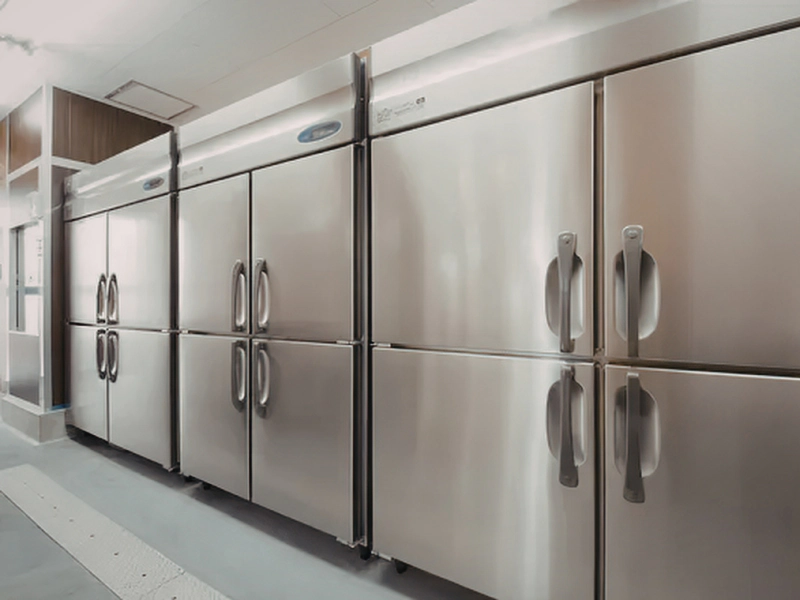
What Are Commercial Refrigeration Systems?
Commercial refrigeration systems are large-scale cooling systems designed to preserve food, medical supplies, chemicals, and other temperature-sensitive products. Unlike residential refrigerators, these systems are built for continuous operation, higher capacity, and precise environmental control.
You’ll commonly find them in:
- Supermarkets and convenience stores
- Restaurants and commercial kitchens
- Cold storage warehouses
- Pharmaceutical and medical facilities
- Beverage production and distribution centers
At their core, these systems rely on thermodynamics to remove heat from a controlled space and transfer it elsewhere, keeping internal temperatures stable regardless of external conditions.
How Commercial Refrigeration Works
Understanding how commercial refrigeration works begins with the refrigeration cycle—a continuous process that moves heat out of a space using a refrigerant.
Here’s a simplified breakdown:
1. Compression
The process begins in the compressor, which pressurizes the refrigerant gas. This raises its temperature and prepares it for heat release.
2. Condensation
The hot, high-pressure gas moves into the condenser coil, where it releases heat into the surrounding air or water. As it cools, it turns into a high-pressure liquid.
3. Expansion
The liquid refrigerant passes through an expansion valve, where pressure drops rapidly. This cooling effect prepares it for heat absorption.
4. Evaporation
In the evaporator coil, the cold refrigerant absorbs heat from the refrigerated space. As it absorbs heat, it evaporates back into a gas, and the cycle repeats.
This closed-loop system is what makes commercial refrigeration systems highly efficient at maintaining consistent temperatures in demanding environments.
Key Components of Commercial Refrigeration Systems
A well-functioning system depends on several critical components working together:
1. Compressor
Often referred to as the “heart” of the system, it circulates refrigerant and maintains pressure.
2. Condenser Coil
Removes heat from the refrigerant and helps convert it into a liquid state.
3. Evaporator Coil
Absorbs heat from the refrigerated space, lowering internal temperatures.
4. Expansion Valve
Regulates refrigerant flow and reduces pressure before it enters the evaporator.
5. Refrigerant
The chemical compound responsible for heat transfer throughout the system.
6. Controls and Sensors
Modern systems rely on digital controls to maintain precise temperatures and optimize efficiency.
Each component plays a crucial role in ensuring the system operates reliably under heavy commercial use.
Commercial Refrigeration Installation Requirements
Proper commercial refrigeration installation is critical to system performance, energy efficiency, and long-term reliability. Even the most advanced equipment will underperform if installed incorrectly.
1. Site Assessment
Before installation, professionals evaluate the space, insulation, airflow, and load requirements. This ensures the system is appropriately sized for the business’s needs.
2. Electrical Requirements
Commercial refrigeration systems require dedicated electrical circuits and stable power supply to support compressors and control systems.
3. Ventilation and Airflow
Proper airflow is essential, especially for condenser units. Poor ventilation can lead to overheating and reduced efficiency.
4. Refrigerant Handling Compliance
Installation must follow environmental and safety regulations for refrigerant handling, especially with modern low-GWP refrigerants.
5. Drainage Systems
Condensate drainage must be properly installed to prevent moisture buildup and water damage.
6. System Calibration
After installation, technicians calibrate temperature controls and test system performance under load conditions.
A properly installed system ensures consistent cooling, lower energy consumption, and fewer maintenance issues over time.
Energy Efficiency and Modern System Design
Energy efficiency is one of the most important considerations in today’s refrigeration industry. Businesses are increasingly focused on reducing operating costs while maintaining performance.
Modern commercial refrigeration systems often include:
- Variable-speed compressors
- High-efficiency evaporator and condenser coils
- Advanced insulation materials
- LED lighting in refrigerated display units
- Smart thermostatic expansion valves
These improvements help reduce energy usage while maintaining stable temperature control, especially in high-demand environments like supermarkets and cold storage facilities.
Commercial Refrigeration Trends Shaping the Industry
The refrigeration industry is evolving rapidly, driven by sustainability goals, technology integration, and regulatory changes. Here are some of the most important commercial refrigeration trends today:
1. Smart Monitoring and IoT Integration
Remote monitoring systems now allow businesses to track temperatures, energy use, and system performance in real time. Alerts can notify managers of potential issues before they become major problems.
2. Eco-Friendly Refrigerants
There is a growing shift toward low-global-warming-potential (GWP) refrigerants that reduce environmental impact while maintaining efficiency.
3. Energy Optimization Systems
AI-driven controls and predictive maintenance systems are helping businesses reduce energy waste and improve operational efficiency.
4. Modular Refrigeration Systems
Flexible, scalable systems are becoming more popular, allowing businesses to expand cooling capacity as they grow.
5. Improved Thermal Storage Solutions
Some facilities now use thermal energy storage to shift cooling loads to off-peak hours, reducing energy costs.
6. Enhanced Food Safety Compliance Technology
Advanced temperature logging and automated reporting systems help businesses meet stricter food safety regulations.
These innovations are transforming how refrigeration systems are designed, installed, and maintained.
The Role of Refrigeration in Modern Industries
From food safety to medical preservation, commercial refrigeration plays a vital role in keeping supply chains stable and products safe. Without it, industries such as healthcare, hospitality, and retail would struggle to operate efficiently.
Reliable refrigeration ensures:
- Food remains fresh and safe for consumption
- Medical supplies are stored at required temperatures
- Supply chains operate without disruption
- Businesses reduce waste and operational losses
As demand for cold storage continues to grow, the importance of efficient and reliable systems becomes even more critical.
Final Thoughts
Understanding commercial refrigeration systems explained goes beyond knowing how they work, it includes recognizing the importance of proper installation, maintenance, and innovation in system design. From the refrigeration cycle to advanced smart technologies, these systems are essential to modern business operations.
As the industry continues to evolve, businesses that invest in energy-efficient, well-installed, and properly maintained systems will benefit from lower operating costs, improved reliability, and better long-term performance.
Whether you are planning a new installation or upgrading an existing system, staying informed about technology and trends will help you make the best decision for your business.